
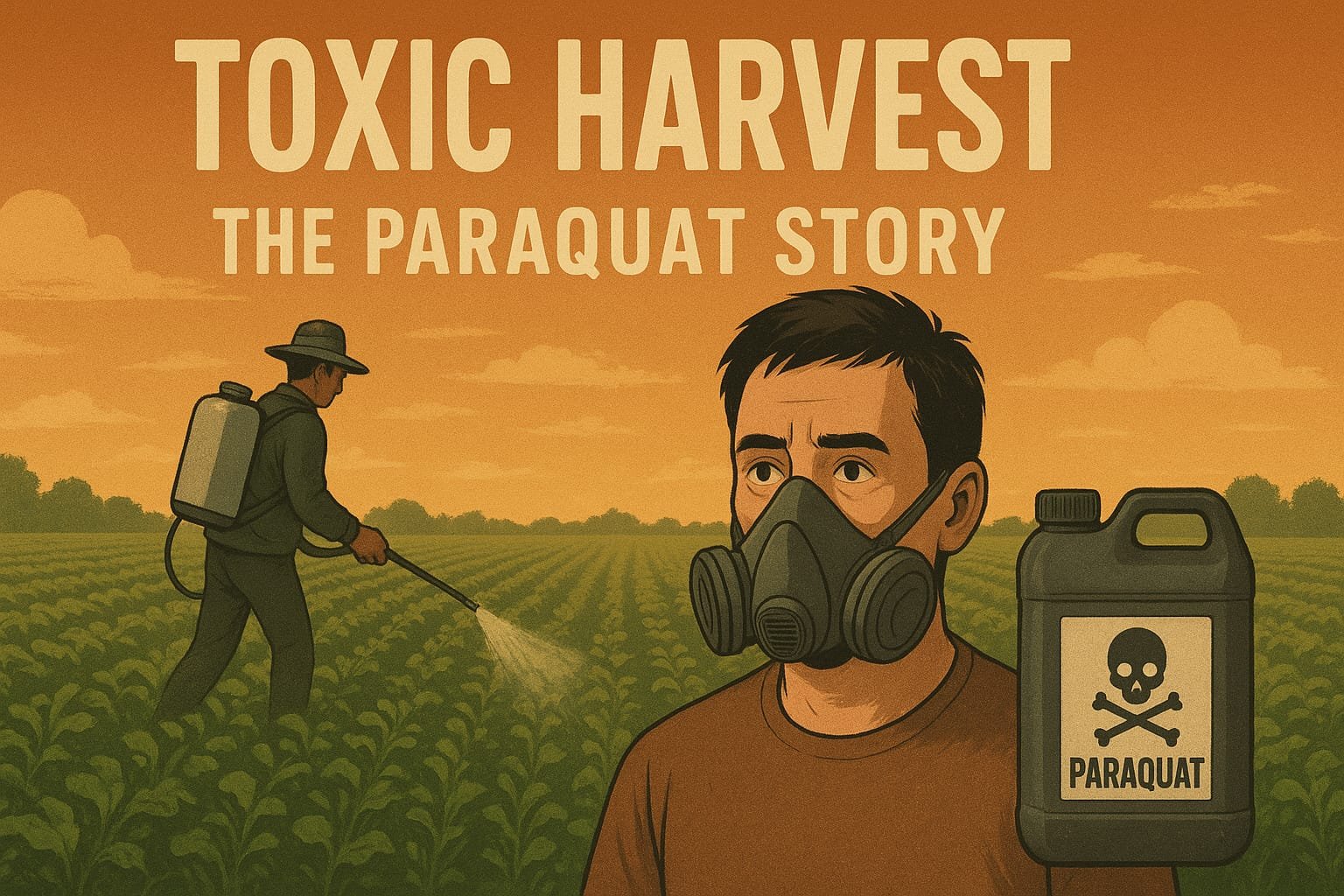
Paraquat Poisoning in ICU
1) History
- Patient: 28-year-old male, farmer. Presenting complaint: Ingested unknown amount of herbicide (Paraquat solution, 20%) after a quarrel at home, brought to ER 3 hours post ingestion with nausea, vomiting, oral burning, and abdominal pain.
- Past medical history: Hypertension x 3 years → on Amlodipine 5 mg OD (Ca-channel blocker, ↓ vascular resistance). No diabetes, cardiac, renal, or respiratory illness. No allergies.
2) Vitals on Admission
- Temp: 98.6 °F
- HR: 126/min (tachycardia)
- BP: 90/60 mmHg (shock)
- RR: 28/min, SpO₂: 92% on room air
- General: Oral ulcers, greenish vomitus, mild dehydration
3) Initial Investigations
- CBC: WBC 13,000/mm³ (stress leukocytosis), Hb 13 g/dL, Plt 180,000.
- RFT: Creatinine 1.6 mg/dL (early renal injury), BUN 40.
- LFT: Mild ↑AST/ALT.
- ABG: pH 7.32, HCO₃ 18, PaO₂ 70 mmHg → metabolic acidosis + hypoxemia.
- Urine sodium dithionite test: Dark blue color → positive for paraquat.
- CXR: Normal initially.
4) ICU Admission & Day-by-Day Course
- Day 1 – Resuscitation & Decontamination
- Gastric lavage avoided (due to caustic injury risk).
- Activated charcoal 50 g NG tube (binds paraquat, prevents absorption).
- Hemoperfusion (charcoal column) attempted within 6 hrs of ingestion.
- IV fluids: NS @ 80 mL/hr (goal MAP >65).
- O₂ therapy restricted → only 2 L/min nasal prongs (high O₂ worsens ROS damage).
- Medications:
- N-acetylcysteine IV (antioxidant, replenishes glutathione).
- Methylprednisolone 1 g IV OD (anti-inflammatory, reduces lung fibrosis).
- Cyclophosphamide 15 mg/kg IV (immunosuppressive, ↓ inflammatory lung damage).
- Pantoprazole 40 mg IV OD (GI protection).
- Ondansetron 8 mg IV TDS (antiemetic).
- Day 2 – Worsening Organ Dysfunction
- Vitals: BP 88/58, HR 134, SpO₂ 89% (NRBM).
- Labs: Creatinine ↑ to 3.2 mg/dL, K⁺ 5.8 mmol/L.
- Oliguria <200 mL/24h → AKI progressing.
- ABG: worsening metabolic acidosis.
- Interventions:
- CRRT (Continuous Renal Replacement Therapy) started.
- Noradrenaline infusion @ 0.1 mcg/kg/min for septic shock physiology.
- Meropenem 1 g IV TDS (empiric antibiotic – risk of aspiration pneumonia).
- Day 3 – Respiratory Deterioration
- Patient developed progressive hypoxemia (PaO₂/FiO₂ <150).
- CXR: bilateral infiltrates (early ARDS).
- Intubated and ventilated: Low tidal volume, FiO₂ kept <40% to minimize ROS.
- Medications continued:
- Steroids + cyclophosphamide.
- Vitamin C & E supplementation (antioxidants).
- Analgesia & sedation: Midazolam infusion 2 mg/hr, Fentanyl 50 mcg/hr.
- Day 4 – Multiorgan Failure
- Vitals: BP 80/50 despite high dose Noradrenaline (0.4 mcg/kg/min).
- Added Vasopressin 0.03 U/min.
- Labs: Creatinine 6.1, worsening liver enzymes, INR 2.3.
- Developed ventilator-associated pneumonia → cultures sent, antibiotics escalated to Colistin 3 MU IV TDS.
- Echo: EF 45%, mild global hypokinesia.
- Day 5 – End of Life
- Persistent refractory hypoxemia (PaO₂ 48 mmHg on FiO₂ 0.6).
- Progressive shock despite dual vasopressors.
- Severe metabolic acidosis (pH 6.95).
- Terminal event: Patient developed ventricular tachycardia → cardiac arrest.
- CPR attempted for 30 min, 6 cycles of ACLS drugs (Adrenaline 1 mg IV q3min, Amiodarone 300 mg bolus), defibrillation.
- Patient declared dead after failed resuscitation.
5) Summary Table
| Day | Events | Key Treatment |
| 1 | Oral burns, AKI early | Activated charcoal, Hemoperfusion, NAC, Steroids, Cyclophosphamide |
| 2 | Oliguria, AKI worsens | CRRT, Noradrenaline, Meropenem |
| 3 | ARDS develops | Intubation, Lung-protective ventilation, Antioxidants |
| 4 | Shock, MODS | Dual vasopressors, Colistin, Sedation |
| 5 | Refractory shock, death | ACLS, failed resuscitation |
6) Fun fact / Memory hook
Paraquat = “Para-kills” → Even tiny ingestion can be lethal due to ROS-mediated lung fibrosis and multi-organ failure.