
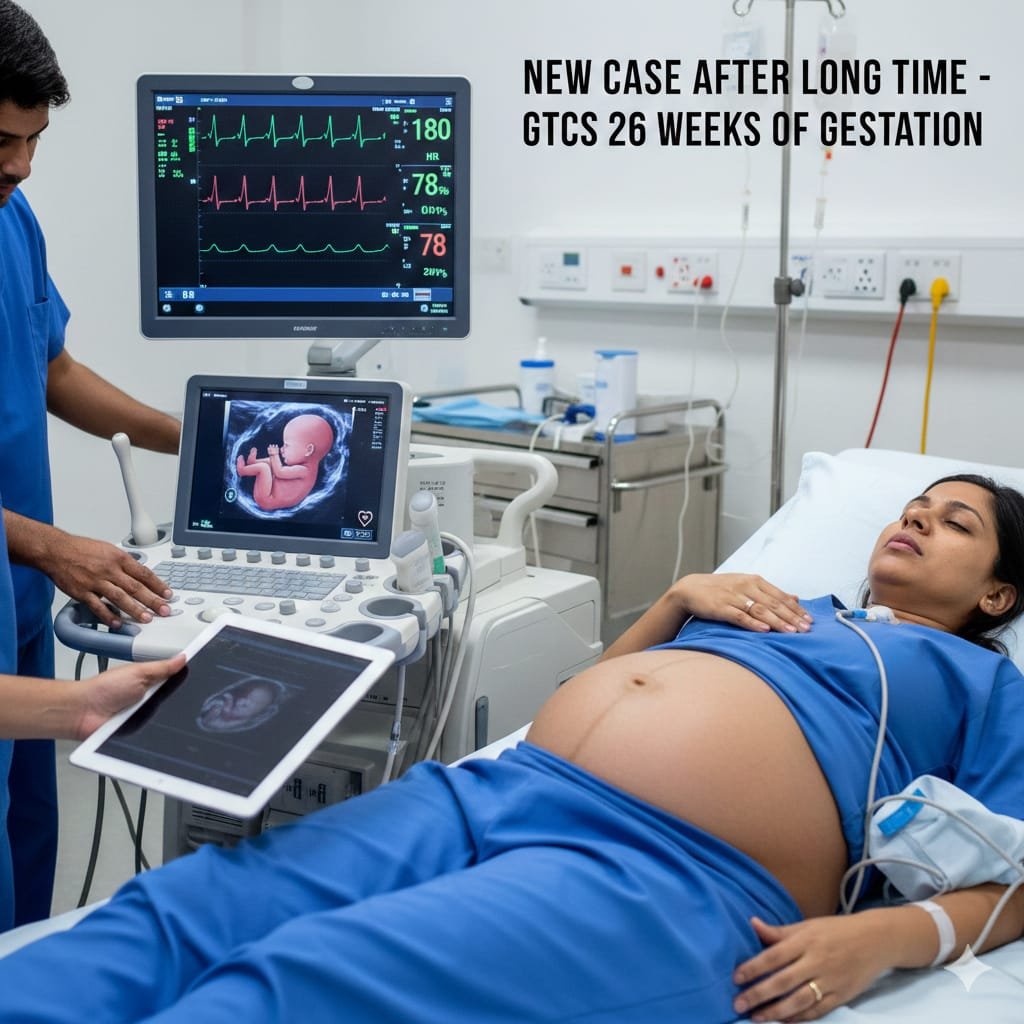
A Dormant Storm Rekindled at 26 Weeks
A breakthrough seizure in pregnancy masquerading as eclampsia
01) Diagnosis
- Primary Diagnosis:
- Breakthrough Generalized Tonic-Clonic Seizure (GTCS) in Pregnancy in a patient with remote history of epilepsy
- Secondary / Complicating Conditions:
- High-risk pregnancy (G3P1A1, 26+5 weeks), Hypokalemia – corrected, Post-ictal encephalopathy (resolved), Eclampsia – considered initially, ruled out after stabilization
02) History of Present Illness (HPI)
- Chief Complaints
- Ongoing convulsion on arrival to emergency
- One episode of generalized tonic-clonic seizure at home
- Duration:- Home episode followed by ER presentation within ~30–40 minutes
- Progression of Illness
- A 29-year-old pregnant female at 26 weeks + 5 days gestation was brought to the emergency department with active generalized tonic-clonic convulsions, preceded by a similar episode at home. Following the seizure, she developed post-ictal drowsiness and was arousable to verbal commands on arrival.
- Associated Symptoms
- Altered sensorium, Post-ictal confusion, Negative History, No fever, No headache or visual disturbances, No vomiting, No trauma or fall, No focal neurological deficit, No prior diagnosis of hypertension, No history of substance use
- Important Additional History
- History of convulsion at 16 years of age
- No long-term antiepileptic treatment
- Seizure-free interval of more than 10 years
03) Past Medical History
- One episode of GTCS at age 16
- No recurrence for over a decade
- No maintenance antiepileptic therapy
04) Obstetric History
- G3P1A1
- 1st pregnancy: Full-term normal vaginal delivery
- 2nd pregnancy: Miscarriage
- 3rd pregnancy: Current pregnancy (26+5 weeks)
- Medications
- Tablet Ecosprin (Aspirin)
- Mechanism: Irreversible COX inhibition → antiplatelet action
- Clinical relevance: Prescribed post-miscarriage; no role in seizure prevention or eclampsia prophylaxis
- Tablet Ecosprin (Aspirin)
05) Physical Examination
- General Examination
- Drowsy but arousable
- Post-ictal state
- No pallor, icterus, cyanosis, or pedal edema
- Systemic Examination
- CVS: S1 S2 normal, no murmurs
- RS: Bilateral air entry present, no added sounds
- CNS: No focal neurological deficit after post-ictal phase
- Abdomen: Gravid uterus corresponding to gestational age
06) Vitals on Admission
HR ~92/min, BP 140/90 mmHg, RR 18/min, Temp:-Afebrile, SpO₂-98% on room air, GCS13/15 (E3 V4 M6)
07) Echocardiography (ECHO)
- LV size: Normal
- LV systolic function: Preserved
- No regional wall motion abnormality
- Valves: Structurally normal
- No pericardial effusion or intracardiac thrombus
08) Investigations (With Values & Justification)
Baseline Investigations (Day 0)
- CBC: No anemia, no thrombocytopenia → HELLP unlikely
- RFT: Within normal limits → no renal involvement
- Electrolytes: Hypokalemia detected → seizure precipitant
- LFT: Normal → excludes hepatic involvement
- RBS: 92 → hypoglycemia
- Coagulation profile: Normal Follow-up Trends
- Potassium normalized after replacement
- No worsening renal or hepatic parameters
09) Imaging
- Neuroimaging kept as backup
- MRI brain / MRV planned only if:- Recurrent seizures, Persistent altered sensorium, Focal neurological deficit
10) ECG
ECG: Normal sinus rhythm
11) Emergency Stabilization (Day 0 – ER)
The patient was immediately managed as a case of seizure in pregnancy >20 weeks, considering eclampsia as the primary life-threatening diagnosis.
- Airway & Breathing
- Airway maintained:- Oxygen administered via face mask
- Circulation:-
- Two wide-bore IV cannulas secured
- Continuous BP and cardiac monitoring
- Medications Administered
- Inj Levetiracetam 1.5 g IV loading
- Rapid seizure control
- Pregnancy-safe antiepileptic
- Inj Magnesium sulfate 4 g IV loading
- Gold standard for eclampsia
- MgSO₄ infusion @ 1 g/hr
- Continued for seizure prophylaxis
- Inj KCl – 2 ampules IV
- Correction of hypokalemia
- Inj Levetiracetam 1.5 g IV loading
12) Day-by-Day ICU Care
- Day 1
- No further seizures
- Sensorium improving
- MgSO₄ infusion continued
- Levetiracetam 500 mg TDS initiated
- Strict fluid balance
- Continuous BP and fetal monitoring
- Day 2
- Fully conscious and oriented
- No seizure recurrence
- Electrolytes normalized
- BP stable without antihypertensive
- MgSO₄ stopped after 24 hours seizure-free
- Day 3
- Maternal condition stable
- Fetal status reassuring
- Shifted to ward
- Continued oral antiepileptic therapy
13) Discharge Medicines
| Drug | Dose | Mechanism | Purpose |
| Levetiracetam | 500 mg TDS | SV2A modulation | Seizure prophylaxis |
| Antenatal supplements | As advised | Nutritional | Maternal–fetal health |
14) Key Notes / Clinical Pearls
- All seizures after 20 weeks pregnancy must be treated as eclampsia initially
- Past epilepsy does not exclude eclampsia
- Pregnancy lowers seizure threshold
- Hypokalemia is a strong seizure precipitant
- Magnesium sulfate saves lives even if diagnosis is uncertain
15) Comparison Table (Pertinent Positives & Negatives)
| Feature | Epilepsy | Eclampsia |
| Past seizure history | ✔ | ✖ |
| Pregnancy >20 weeks | ✔ | ✔ |
| BP elevation | ✖ | ± |
| Response to AED | ✔ | ✖ |
| Response to MgSO₄ | ± | ✔ |
16) Pathophysiology (Case-Specific)
Pregnancy leads to hormonal changes, altered pharmacokinetics, and reduced seizure threshold. In this patient, remote epilepsy combined with hypokalemia likely precipitated a breakthrough seizure. Eclampsia was initially suspected due to gestational age but ruled out after stabilization and absence of progressive hypertensive features.